
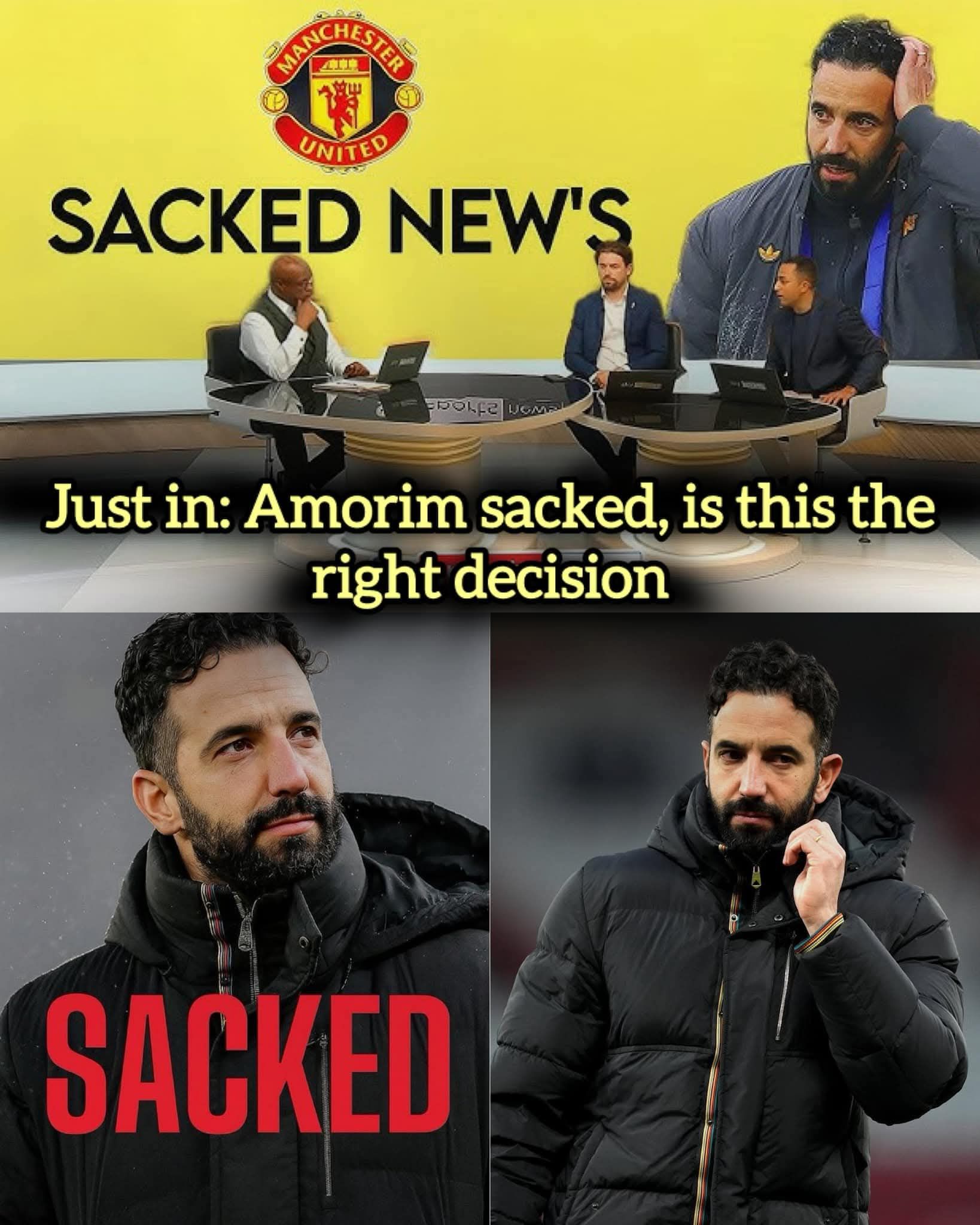
Rúben Amorim’s tenure at Manchester United has ended in dramatic fashion, following a disappointing home draw against Wolves that appeared to be the final straw for the club’s leadership. What was intended to be a routine fixture turned into a tipping point, forcing urgent decisions from senior management.
Multiple sources have confirmed that the decision to relieve Amorim of his duties came late at night, after an emergency meeting involving the board, football directors, and key executives. The atmosphere in the boardroom was reportedly tense and heavy, with many already resigned to the view that the situation was irreparable.
By early morning, Amorim had been formally informed of his dismissal, and players arriving at Carrington were quickly made aware. Reactions across the squad ranged from shock to relief, reflecting a team divided in its perception of the Portuguese coach’s leadership.
The Wolves match itself was pivotal. While a draw might normally be manageable, context amplified its impact. Wolves, struggling in the league and winless in nearly nine matches, were expected to be a beatable side. Manchester United, however, delivered a flat, uninspired performance, showing little tactical cohesion or urgency. As Wolves grew bolder, United’s players seemed increasingly uncertain, culminating in boos from the Old Trafford crowd.
For the board, the result exposed broader systemic issues. Persistent problems with tactics, player roles, and in-game management highlighted a lack of clear direction. Amorim’s methods, once praised for boldness and innovation, were now seen as inconsistent and misaligned with Premier League expectations.
Sources indicate that the decision to sack Amorim was accelerated by these concerns. The board feared that continuing under his guidance could jeopardize the upcoming January transfer window and allow fan frustration to intensify. With the squad’s morale already fragile, the timing of the dismissal was deemed critical.
Emergency discussions behind closed doors reportedly focused on tactical rigidity, questionable selection choices, and slow adjustments during matches. Officials worried that Amorim’s philosophy was not translating into consistent performances, a crucial requirement for a club of Manchester United’s stature.
Players’ reactions at Carrington reflected the tension within the squad. Senior players who had previously supported Amorim were left uncertain, while younger members felt a mix of relief and confusion. Reports suggest that morale had been uneven for weeks, with some players doubting their roles and overall strategy under Amorim.
The Wolves result ultimately crystallized concerns about the manager’s ability to lead the team forward. A draw against a struggling side at home was perceived as a failure to assert authority and control, making immediate intervention unavoidable.
Fans were equally divided in their response. Some welcomed the decision, arguing that it was long overdue. Others criticized the timing, fearing it could trigger another cycle of managerial instability. Social media reactions captured the spectrum of opinions, from celebrations to skepticism.
Critics of Amorim have pointed to his inability to implement a system that maximized the squad’s strengths. While his tactical ideas were innovative on paper, their execution often faltered in high-pressure matches. Substitutions were questioned, and promising phases of play were frequently inconsistent.
The decision to act now was also influenced by the looming January transfer window. The club wanted clarity before player negotiations commenced, ensuring that recruitment could proceed under a new strategic vision rather than under an uncertain managerial regime.
Interim arrangements are expected to be announced shortly. While a permanent successor will not be rushed into place, the next coach will inherit a squad low on confidence but rich in talent, offering a chance to reset the team’s direction before critical matches resume.
The sacking marks another chapter in Manchester United’s ongoing search for stability. Past managerial changes have often brought short-term results but failed to address underlying structural and tactical issues. The club now faces a critical crossroads: to rebuild with patience or risk repeating past mistakes.
Attention has already shifted to potential interim managers, with the board considering experienced coaches capable of steadying the ship. The ideal candidate will need to balance tactical authority with player management, ensuring that the squad regains belief while remaining competitive across multiple competitions.
For Rúben Amorim, the dismissal is a significant setback. His tenure began with promise, characterized by tactical intelligence and a clear vision, but the Premier League’s demands ultimately exposed inconsistencies. Despite this, his reputation may allow him opportunities elsewhere, though the high-profile nature of this exit will be widely scrutinized.
Manchester United now enters a period of uncertainty, where fan patience, squad resilience, and executive decision-making will determine the club’s trajectory. The coming weeks will be a test of organizational coherence, strategic planning, and the ability to rebound from a turbulent chapter in Old Trafford’s storied history.