
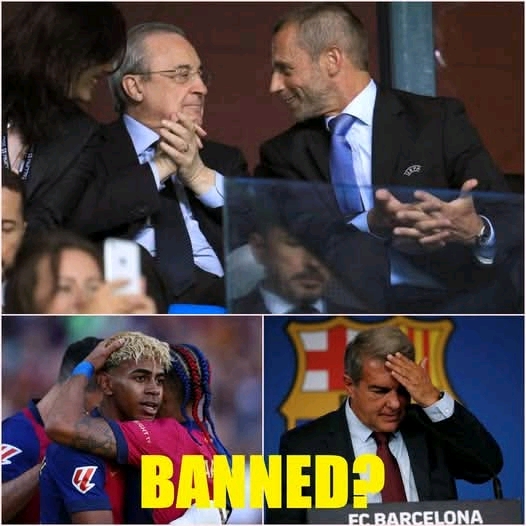
The world of European football has been thrown into disarray once again, with FC Barcelona at the center of a new storm. Behind the scenes, intense discussions and tensions have surrounded the club’s precarious financial state. Barcelona has officially acknowledged a “difference of opinion” with UEFA regarding a recent financial audit, signaling awareness of a potential severe punishment looming over their 2023/24 campaign.
At the heart of the controversy is how Barcelona reported income from their “economic levers”—aggressive financial moves to balance the books. UEFA’s audit questions the legitimacy of these funds, particularly revenues from transfers like Raphinha and Robert Lewandowski. While La Liga considers them regular income, UEFA classifies them as “exceptional,” a critical accounting difference with major consequences. The dispute has escalated into a power struggle in Spanish and European football.
Real Madrid president Florentino Pérez has weighed in, emphasizing the importance of “respecting the rules” in a thinly veiled jab at Barcelona. The rivalry between the two clubs has now extended beyond the pitch into financial and regulatory battles. Barcelona is no stranger to financial violations. In 2022, UEFA fined the club €500,000 for similar discrepancies, warning that repeat offenses could bring harsher penalties.
That warning now looms large, with the Court of Arbitration for Sport (CAS) stating that a guilty verdict could result in partial or total exclusion from European competitions, including the Champions League. The threat of exclusion comes at a disastrous time for Barcelona, who rely on Champions League revenue for financial stability. A ban would cripple their sporting and economic recovery under new manager Hansi Flick.
Club executives are scrambling to mount a legal defense, but President Joan Laporta’s private discussions with UEFA have reportedly been tense and unproductive. Meanwhile, Real Madrid sees an opportunity to strengthen their position. Pérez’s remarks suggest satisfaction with Barcelona’s predicament, framing it as a test of UEFA’s commitment to financial fairness. Many in Madrid believe Barcelona’s financial tactics gave them an unfair advantage, and this could be their reckoning. Barcelona fans are left in anxiety, unsure whether their team will compete in Europe next season.
The Spanish press is divided, with some accusing UEFA of inconsistency and others arguing Barcelona knowingly took risks. The crisis also threatens to derail Flick’s plans, overshadowing his efforts to rebuild the squad. If sanctions are imposed, the repercussions could extend beyond one season, affecting transfers, sponsorships, and player morale. For Real Madrid, this moment validates their strict financial approach. The rivalry between the two clubs has reached a new level, with Barcelona fighting for survival while Madrid watches with calculated interest.
The coming weeks will determine whether UEFA makes an example of Barcelona or grants them leniency. Either way, this saga is more than just a club issue—it’s a test of UEFA’s credibility and the future of financial regulation in European football.