
Barcelona’s thrilling attacking style under Hansi Flick may be winning over fans and neutrals alike, but it hasn’t convinced everyone inside the dressing room. Wojciech Szczesny, the experienced Polish goalkeeper who joined the Catalan giants recently, has opened up about his reservations regarding Flick’s philosophy — and his comments have stirred both surprise and discussion.
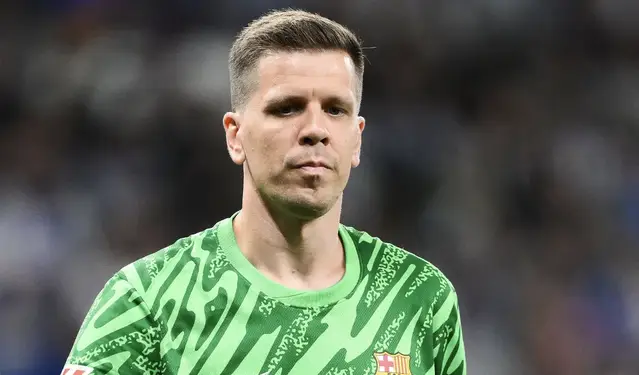
In a candid interview, Szczesny didn’t hold back. “This isn’t my kind of football,” he said when asked about Barcelona’s dynamic play under Flick. “What Barcelona did last season was remarkable. For the fans, it looks great. But it’s not my kind of football, and even success doesn’t change the way I see the style I prefer.”
It’s a rare glimpse into the differing perspectives within a club that prides itself on a unique style of play. While fans have been thrilled by Barcelona’s return to high-intensity, attacking football under Flick — a shift from the often cautious approach seen during Xavi Hernández’s final months — Szczesny’s remarks suggest not everyone finds the transition comfortable.
As a goalkeeper, Szczesny’s view is understandable. He highlighted a scenario that goalkeepers dread: a team pushing relentlessly for more goals even when a match is already won. “I’m a goalkeeper. And when we’re leading 4–0, and the guys are so eager to make it 5–0, forgetting everything else, it’s frustrating,” he confessed.
For him, a clean sheet is as valuable as a goal. “A goalkeeper also wants to keep a clean sheet. But the guys want to keep scoring and enjoying themselves, and for me, that’s tough,” he added. His comments reveal the delicate balance between entertaining football and tactical discipline — a balance Flick must carefully manage as he shapes his squad.
Szczesny made it clear that his view wasn’t an attack on Flick or the team. “The team could recognize the risks and not stick to one game plan for all 90 minutes. But as I said, it’s not serious criticism. It’s just my opinion.” This statement reflects a measured perspective — one shaped by years of experience at clubs like Juventus, where pragmatism often outweighed flamboyance.
Indeed, his reference to “not sticking to one game plan” hints at a deeper tactical debate. Should teams adapt their approach mid-game to preserve leads, or continue pressing the opponent until the final whistle? Flick’s vision is clearly the latter — relentless, high-octane, and fan-oriented.
Barcelona fans, many of whom were starved of exciting football in recent years, have largely embraced Flick’s philosophy. The German coach has reignited the club’s identity with bold attacking transitions, fluid movement, and aggressive pressing — elements that defined the golden era of Barça football. But this comes with defensive vulnerabilities, as seen in the Champions League semi-final exit last season.
Szczesny’s viewpoint adds an interesting layer to that narrative. Coming from a Juventus side known for its defensive resilience and structured play, he naturally gravitates toward a more conservative style. For him, results and risk management matter more than flashy moves or high scorelines.
Still, Flick’s approach is unlikely to change. His success with Bayern Munich — including a historic treble — was built on similar principles: pushing the opponent to the edge, maximizing offensive potential, and trusting in his players’ ability to overwhelm rather than absorb. That said, integrating veterans like Szczesny, who come from contrasting tactical backgrounds, will be part of Flick’s managerial challenge.
It also raises questions about player roles and squad harmony. Will Szczesny adapt to Barcelona’s high-risk-high-reward style, or will Flick adjust certain tactics to suit his keeper’s instincts, especially in tight European matches? As the new season nears, how Flick manages these internal differences could be just as crucial as his matchday line-ups.
At the end of the day, Szczesny’s honesty should be welcomed. It offers a peek into the conversations and tensions that happen behind closed doors at top-level clubs. While fans cheer the goals, coaches and players often grapple with the hidden details — from game management to mentality and positioning.
Barcelona’s future under Flick looks bright, but as Szczesny’s remarks remind us, every footballing revolution comes with internal debates. And sometimes, those quiet disagreements are what push a team to refine its identity even further